dceaa20dd82e5c83c6…The English page renders the captured source as Markdown and preserves its images and links. Copyright remains with the official publisher.
How to send money to Colombia from the US: A step-by-step guide
Evidence tier: A1 Evidence type: Auto-discovered official publication Source: MoneyGram Corporate News Official publication date: 2026-06-22 Captured: 2026-07-18T16:33:08.214Z
June 22, 2026
Millions of people in the US send money to Colombia every year to support family, cover everyday expenses, help with medical bills, pay for school, or send money for special occasions.
Whether your recipient is in Bogotá, Medellín, Cali, Barranquilla, Cartagena, Bucaramanga, or a smaller town, the right delivery option can make the process easier for both of you.
This guide walks through how to send money to Colombia with MoneyGram. By the end, you’ll know which delivery method may work best for your recipient, what information you need, how long the transfer can take, and what it costs.
Who sends money to Colombia, and why
Money sent from the US to Colombia is often family support. It may help cover rent, groceries, school fees, medical needs, monthly bills, or bigger moments like a home project, business expense, or celebration.
Many Colombian senders in the US are based in places like Florida, New York, New Jersey, and Texas, but people send money to Colombia from across the country. Because this is such an active route, recipients in Colombia usually have several ways to receive money, including cash pickup, bank transfer, mobile wallet, and debit card options.
How your recipient can receive money in Colombia
Cash pickup
Cash pickup is one of the most popular ways to receive money in Colombia. MoneyGram works with several Colombian payout partners, including Davivienda, Banco W, Almacenes Oportunidades, Gana, Coltefinanciera, Financiera Pagos Internacionales, 4-72, Puntored, and Oroexpress.
Your recipient can collect the money in Colombian pesos with a valid government-issued photo ID and the 8-digit reference number from your transfer. For Colombian citizens, this is usually a cédula de ciudadanía. Cash pickup is often available within minutes of confirmation.
Bank account transfer
MoneyGram supports direct transfers into major Colombian bank accounts, including Bancolombia, Davivienda, BBVA Colombia, Banco de Bogotá, and others. Bank transfers can be a good option when your recipient wants the money in their account for bills, savings, card spending, or future transfers.
Mobile wallet
Mobile wallets are also becoming more common in Colombia. If your recipient uses a wallet supported by MoneyGram, you may be able to send money directly to the app. This can be a convenient option when they do not want to visit a location or use a bank account.
MoneyGram® Money Transfers app
Receivers in Colombia can download the MoneyGram app to receive transfers directly to on their phones. This allows user to receive money, convert and store money in digital US dollars (USDC), and withdraw cash in Colombian pesos at participating locations when their ready to use it.
Debit card
Eligible Colombian debit cards may also receive direct transfers. Card eligibility depends on the issuing bank.
Step-by-step: Sending to Colombia with MoneyGram
Step 1. Sign up or log in
Open the MoneyGram® app or visit MoneyGram.com. Create a profile if you’re new, using your basic personal details and a valid US government ID. If you’ve sent before, log in.
Step 2. Enter the transfer details
Enter how much you want to send. Choose Colombia as the destination. Then choose the delivery method: cash pickup, bank transfer, mobile wallet, or debit card.
Before you confirm, you’ll see the exchange rate from USD to Colombian pesos, the transfer fee, estimated delivery time, and exact amount your recipient will receive.
Step 3. Add your recipient’s details
For cash pickup, you’ll need your recipient’s full legal name as it appears on their cédula or other government-issued ID.
For bank transfer, you’ll need their full legal name, bank name, and account number.
For mobile wallet, you’ll need the phone number connected to the wallet.
Step 4. Pay and confirm
Pay with a US bank account, debit card, or credit card. Review the summary, confirm, and save your 8-digit reference number. Share the number with your recipient if they are collecting cash.
How long does a transfer to Colombia take?
Timing depends on the delivery method. Cash pickup is often available within minutes, so your recipient can collect once the money is ready. Mobile wallet transfers are also typically fast. Bank transfers depend on the receiving bank’s processing schedule and may take longer.
MoneyGram shows the expected timing for your specific transfer during setup. Once the transfer is on its way, you can track it in real time.
What it costs to send money to Colombia
The total cost includes the transfer fee and the exchange rate from USD to Colombian pesos. Both vary based on the amount you send, how you pay, how your recipient will receive the money, and timing.
Before you confirm, you’ll see the fee, exchange rate, estimated delivery time, and exact peso amount your recipient will receive. New MoneyGram customers can send their first transfer with no fee.
A Note on Colombian Pesos: Reading the Amount
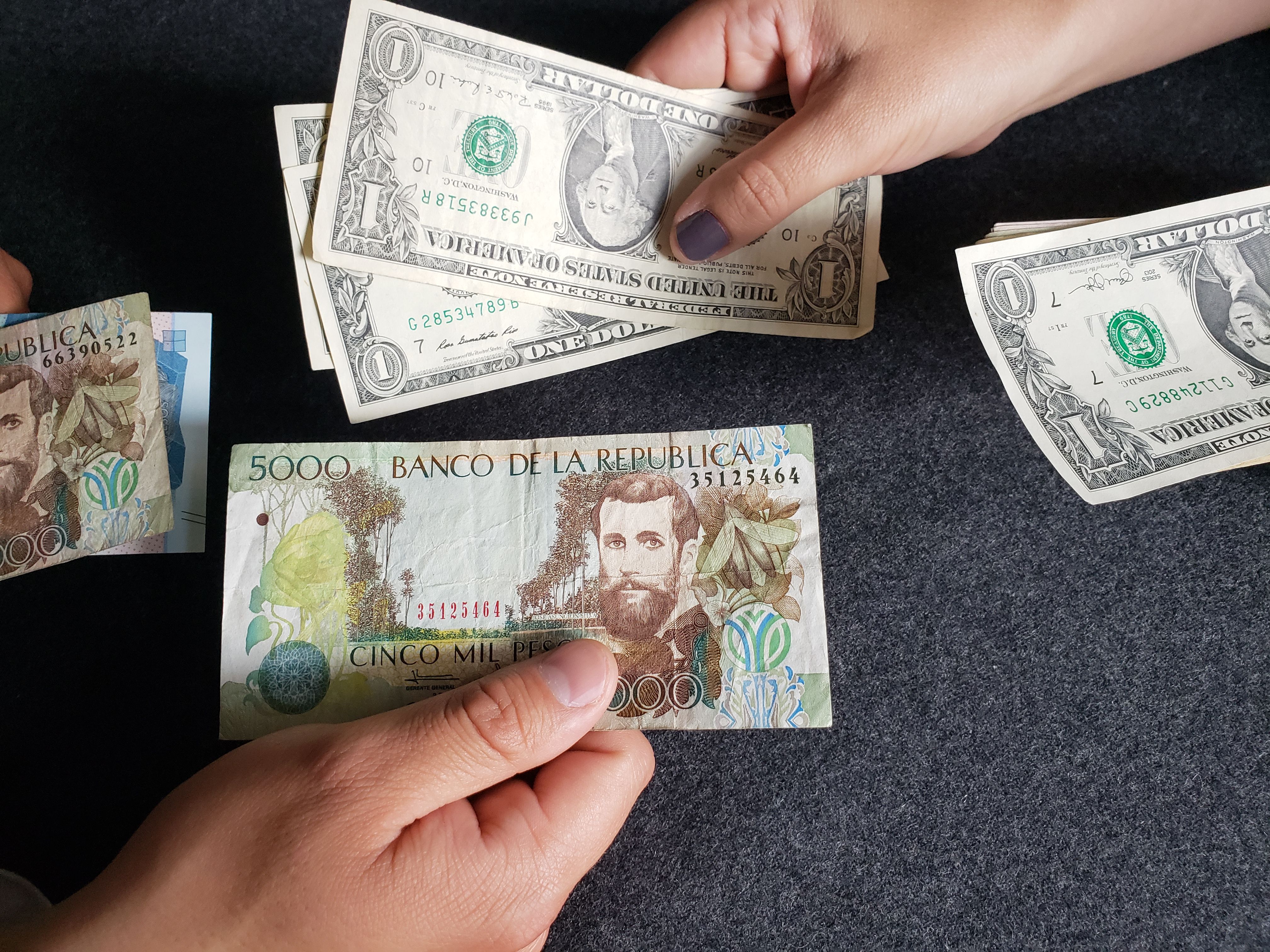
If it’s your first time sending money to Colombia, the peso amount may look surprisingly large. That’s because Colombian pesos use larger denominations than US dollars. For example, USD 100 can convert to several hundred thousand Colombian pesos, depending on the exchange rate.
MoneyGram shows the exact amount your recipient will receive before you confirm, so you don’t have to do the math yourself or guess what will arrive.
Sending to Colombia safely
MoneyGram has served customers sending money to Colombia for decades. Transfers are protected by encryption, fraud monitoring, and transaction verification.
Still, it’s important to watch for scams. Be cautious of requests that feel urgent, ask you to keep the transfer secret, or come from someone you have not met in person. If someone claims to be a family member in trouble, take a moment to verify before you send.
Frequently asked questions
How much money can I send to Colombia in one transfer?
Send limits depend on your verification status, payment method, and delivery method. The limit shown during setup is the one that applies to your transfer.
What ID does my recipient need to collect cash in Colombia?
Your recipient will need a valid government-issued photo ID. Colombian citizens typically use a cédula de ciudadanía. Foreign residents may use a cédula de extranjería or another accepted government ID. The name on the ID must match the name entered on the transfer.
Can I send to a Bancolombia account through MoneyGram?
Yes. Bancolombia is among the supported destination banks. You’ll need your recipient’s full legal name as it appears on the account and their Bancolombia account number.
Do I have to send Colombian pesos, or can I send dollars?
From the US, you pay in US dollars. MoneyGram converts your dollars to Colombian pesos at the exchange rate shown during setup, and your recipient receives pesos.
Can I send money to Colombia on a Sunday?
Yes. Cash pickup and mobile wallet transfers may be available outside normal banking hours. Bank transfers may take longer if sent on a weekend or Colombian banking holiday.
Will my recipient need to pay tax on money I send them?
Family remittances are generally not treated as income in Colombia, but large or recurring transfers may have reporting requirements. Your recipient should contact a qualified Colombian tax advisor if this applies.
The information provided is for general informational purposes only and is not intended as personal financial, legal, or tax advice.
 MoneyGram