Studio session 4: Learning from the past to navigate global trade today
Evidence tier: A1
Evidence type: Auto-discovered official publication
Source: Standard Chartered News
Official publication date: 2026-09-21
Captured: 2026-10-12T22:40:43.079Z
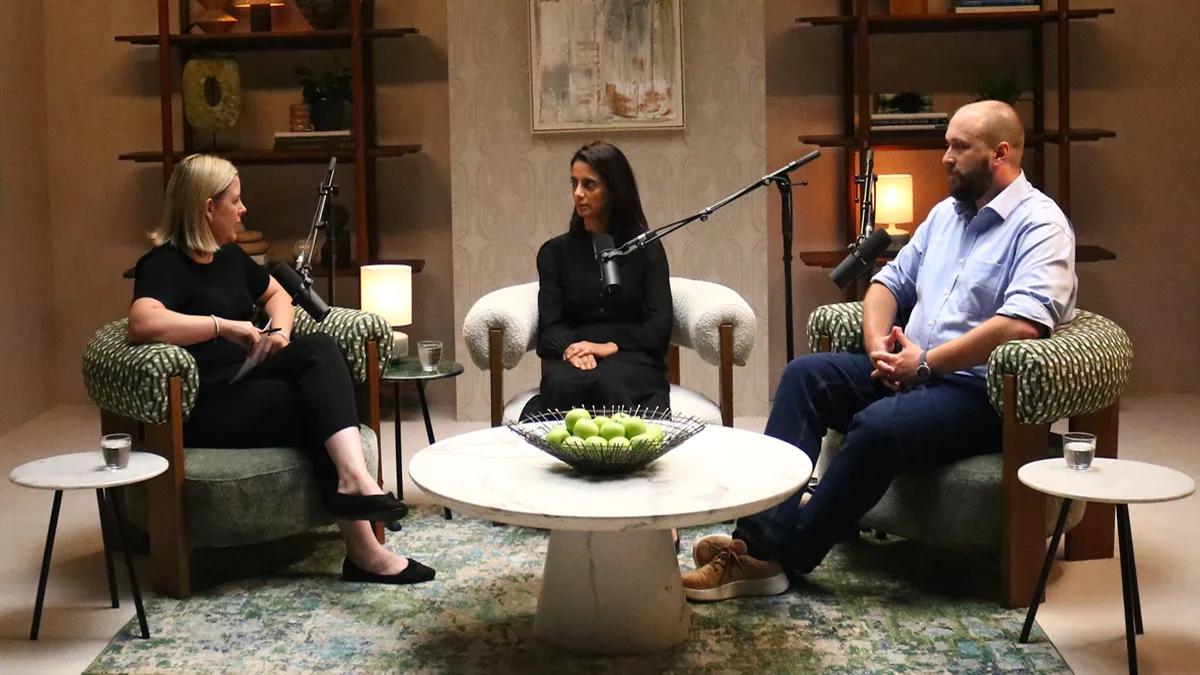
A leading historian and author and our Head of Thematic Research discuss the historical patterns that continue to shape global commerce.
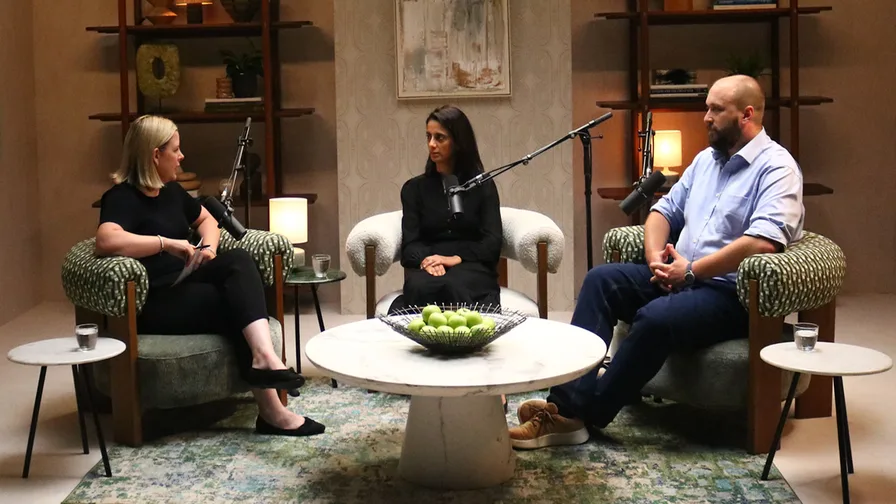
Echoes from the past might help us better understand today’s fragmented trade landscape and its future, according to leading historian Professor Edmond Smith.
Edmond, noted author and Professor and Historian of Globalisation, Capitalism and Economic Cultures at the University of Manchester, believes that the current state of trade and the potential of technology to fundamentally transform it have historical precedent.
“The shift towards a more multipolar world, that we’re seeing today, can be understood, if you take a long-term perspective, as something more akin to a return to historical norms,” he explains in our latest Studio Sessions podcast episode, Trade in a fragmented world.
“Some of the challenges of navigating a multipolar world align with the experiences that came from the emergence of a more globalised and connected world.”
While today’s trade environment is often described as fragmented, Edmond argues that it may be closer to what we’ve seen in the past. For much of history, trade operated across multiple centres of economic influence, requiring merchants and businesses to navigate a diverse network of markets, relationships and trading routes.
But the shift to a more fragmented landscape is not only creating challenges. As trade patterns evolve, new corridors and commercial relationships are emerging, creating fresh opportunities for businesses willing to adapt to a changing landscape.
If the structure of trade is becoming more complex, the next question is how businesses can respond. Here, again, history offers a useful parallel. While AI and digitalisation have the potential to fundamentally alter the trade landscape today, in the 19th century, it was the birth of the telegraph that helped transform the way goods and services were delivered.
Edmond says: “An analogy from the past would be looking at developments that have sped up communication. That could be the use of telegraphs and telegram systems to connect the world during 19th-century globalisation, so that you could have the immediacy of contact.”
The significance was not simply faster communication. Greater access to information helped merchants respond more quickly to changing conditions, coordinate activity across markets and make decisions with greater confidence. Edmond sees parallels with the potential role AI could play in helping organisations process information in a more complex trading environment.
He continues: “If AI allows for decision-making to happen at an even greater pace and, perhaps, overcomes some of the frictions that a more fractured trading environment will create, then maybe you see the possibilities for AI as an information system.”
Even the smallest firms
An increased use of AI and digitalisation may democratise trade – opening it up to a broader range of players – in a similar way to how the telegram helped democratise information, chiefly through the press.
The implications are not limited to large multinationals. Madhur Jha, Global Economist and Head of Thematic Research at Standard Chartered, believes new technologies could also broaden participation in trade.
“The access to trade finance, on a digital basis, is another very interesting development for small firms, because a lot of these firms were out of the system due to their lack of traditional banking models.”
Historically, smaller firms have often faced barriers to international trade because of limited access to information, networks and financing. Digital trade platforms and technology-enabled trade finance have the potential to reduce some of those barriers, making it easier for businesses to participate in cross-border commerce.
Re-establishing trust networks
Innovation may change how information moves around the world, but trade still depends on trust. As businesses enter new markets and build relationships with unfamiliar partners, they often need to navigate different legal systems, commercial practices and cultural norms.
History suggests that building trusted networks becomes even more important during periods of change.
It’s about re-establishing trust networks that can cross between different institutional practices, the ability to place firms and agents in contexts that are more unfamiliar, and to navigate the challenges of fracture as a part of doing business.

Edmond Smith
Professor of Economic Cultures
In practical terms, that means finding reliable ways to work across unfamiliar environments. For business leaders, the challenge is not simply understanding new markets, but developing the relationships and confidence needed to operate successfully within them.
He concludes: “This was so fundamental for the emergence of globalisation, and we can see a context where we’re returning to those important conversations today.”
Of course, the past cannot predict exactly what comes next for global trade. But it does offer useful clues. Earlier periods of change show how businesses adapted to new technologies, shifting trade routes and evolving commercial relationships.
As the world becomes more multipolar, those lessons may prove increasingly valuable for leaders looking to identify opportunities amid uncertainty.
This article is based on a discussion between Edmond Smith, Professor and Historian of Globalisation, Capitalism and Economic Cultures at the University of Manchester, and Madhur Jha, Global Economist and Head of Thematic Research at Standard Chartered, recorded as part of Studio Sessions. Watch the full episode: Trade in a fragmented world.